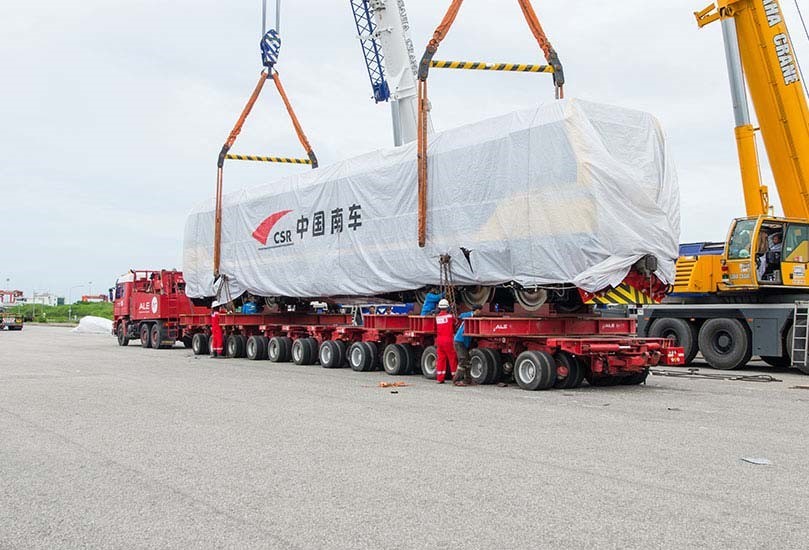
Heavy Equipment Transportation: Safety, Planning and Best Practices
Heavy equipment is an essential part of construction, infrastructure, industrial, and contracting projects. Excavators, bulldozers, loaders, cranes, generators, and other large machinery allow companies to complete demanding tasks efficiently.
However, moving this equipment from one location to another presents unique transportation challenges. Heavy machinery is often large, extremely heavy, and difficult to handle using standard transportation vehicles.
Successful heavy equipment transportation therefore requires careful planning, appropriate fleet selection, experienced operators, and strong attention to safety.
Understanding Heavy Equipment Transportation
Heavy equipment transportation involves moving large machinery between project sites, warehouses, industrial facilities, and other locations.
The transportation process begins long before the vehicle reaches the road. The logistics team must understand the equipment’s dimensions, weight, loading requirements, destination, route, and delivery schedule.
This information helps determine the most suitable transportation solution.
Choosing the Right Trailer
Selecting the appropriate trailer is one of the most important decisions in heavy equipment transportation.
Lowbed trailers are commonly used for transporting large construction machinery because their low deck height can provide improved stability and loading flexibility.
Flatbed trailers may also be suitable for certain equipment and cargo types.
The correct trailer depends on the dimensions, weight, configuration, and loading requirements of the equipment.
Preparing Equipment for Transportation
Before transportation begins, equipment should be properly prepared.
Depending on the type of machinery, preparation may include removing detachable components, securing movable parts, checking fluid levels, and ensuring that the equipment is suitable for transportation.
Proper preparation reduces the risk of damage and makes loading and unloading more efficient.
Safe Loading and Securing
Loading heavy machinery requires careful attention.
The equipment must be positioned correctly on the trailer, with weight distributed appropriately. Once loaded, suitable securing methods should be used to prevent unwanted movement during transportation.
The transportation team should verify that the equipment is properly secured before departure.
This step is critical because improperly secured machinery can create serious safety risks.
Route Planning
Heavy equipment cannot always follow the same routes as ordinary vehicles.
Large machinery may require additional clearance because of its height, width, or length. Bridges, narrow roads, sharp turns, low-clearance structures, construction zones, and difficult site entrances may create challenges.
Route planning helps identify these issues before transportation begins.
A carefully evaluated route can reduce delays and improve transportation safety.
Vehicle Inspection
The transportation vehicle and trailer should be inspected before the journey.
Important areas may include:
- Tires
- Braking systems
- Lights
- Coupling equipment
- Securing equipment
- Trailer condition
- Safety equipment
Regular inspections help identify potential problems before they become transportation risks.
Driver and Operator Experience
Experienced drivers play an important role in heavy equipment transportation.
Large loads require greater awareness of vehicle dimensions, braking distances, turning requirements, road conditions, and surrounding traffic.
Professional drivers also need to communicate effectively with loading teams, site personnel, and project managers.
Experience allows drivers to respond more effectively to unexpected conditions during transportation.
Communication During Transportation
Clear communication helps keep heavy transportation operations organized.
Project teams should have accurate information about loading times, departure schedules, expected arrival times, and site access conditions.
If circumstances change, such as weather conditions, road restrictions, or site delays, timely communication allows the transportation plan to be adjusted.
Protecting Valuable Equipment
Construction and industrial machinery represents a significant investment.
Damage during transportation can result in repair costs, project delays, and operational disruption.
Proper loading, securing, route planning, and vehicle selection help reduce these risks and protect the equipment throughout the journey.
Efficiency and Cost Management
Safe transportation should also be efficient.
Selecting an appropriate vehicle can reduce unnecessary trips and improve loading capacity. Proper route planning can reduce travel time and avoid avoidable delays.
Effective logistics planning therefore contributes not only to safety but also to cost control.
Working With a Professional Logistics Provider
Heavy equipment transportation is a specialized service. Businesses should choose transportation providers based on their experience, fleet capabilities, safety practices, equipment condition, and ability to manage complex transportation requirements.
A professional provider should understand that every piece of equipment and every project can have different requirements.
The Prime Grace Approach
At The Prime Grace Trading Contracting & Logistics, we understand the challenges involved in transporting heavy machinery and specialized equipment.
Our transportation approach focuses on careful planning, suitable fleet selection, secure handling, route assessment, and reliable coordination.
We work to understand the specific requirements of each transportation assignment so that equipment can be moved efficiently and responsibly.
Whether the requirement involves construction machinery, industrial equipment, or other heavy cargo, proper preparation and professional coordination remain essential.
Conclusion
Heavy equipment transportation requires a combination of planning, safety, suitable vehicles, secure loading, route assessment, experienced personnel, and reliable communication.
The objective is not simply to move heavy machinery from one location to another. It is to transport valuable equipment safely while minimizing delays, reducing operational risks, and supporting the requirements of the project.
For construction companies, contractors, and industrial businesses, selecting an experienced transportation partner can make the entire process more organized and dependable.
At The Prime Grace Trading Contracting & Logistics, we believe that successful heavy transportation begins with understanding the cargo and ends with delivering it safely and efficiently.
When the right fleet, proper planning, and experienced logistics professionals work together, even complex heavy transportation requirements can be managed with confidence and precision.